Cyber meets physical: NIS2 compliance demands a unified security strategy


As European businesses prepare for the impact of the NIS2 Directive, many are rightly focused on boosting digital resilience. But another critical part of the picture is sometimes overlooked: physical access.
The updated EU-wide NIS2 legislation, which replaces an original 2016 directive, significantly broadens both the scope and the obligations for compliance. It now applies to a much larger group of organizations – from critical infrastructure and the finance sector to healthcare and manufacturers. More than 160,000 entities across Europe are expected to fall under its remit.
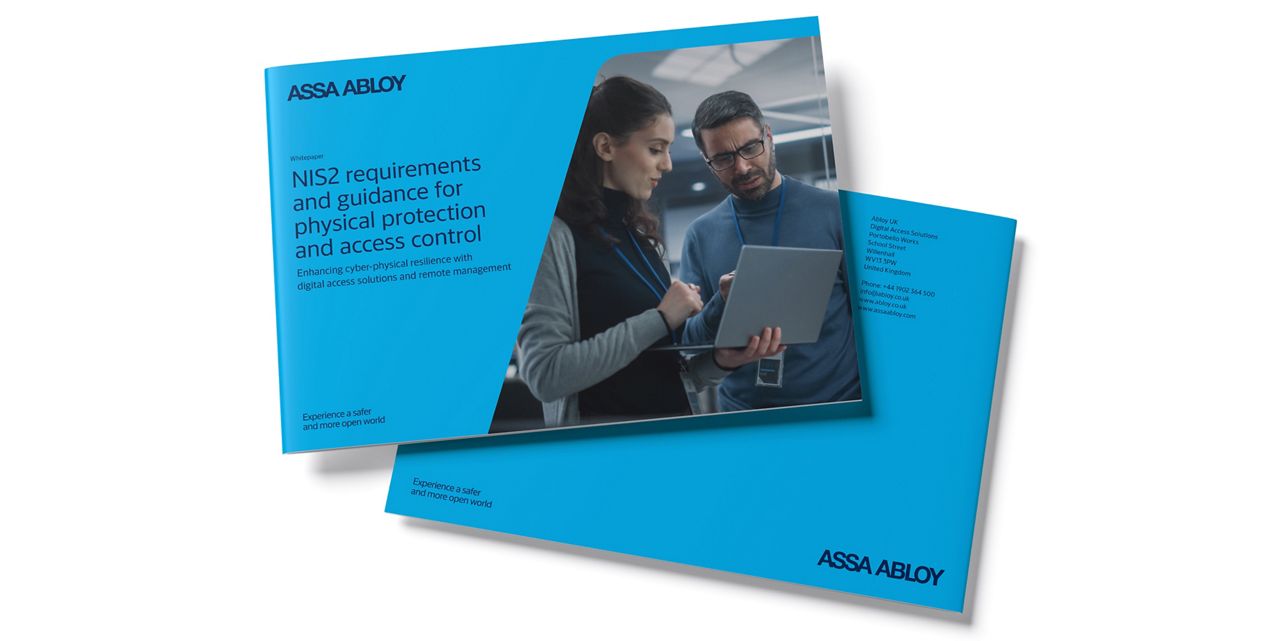
Written in accessible language and with a strategic focus, a new ASSA ABLOY whitepaper, “Enhancing Cyber–Physical Resilience with Digital Access Solutions”:
- Explains how you can learn whether NIS2 applies to you
- Details the relationship between access control and NIS2
- Includes an actionable compliance checklist for facilities teams
- Suggests ways to identify and close access-related vulnerabilities
- Identifies practical steps to upgrade your cyber–physical resilience
- Outlines how various digital access solutions support NIS2 goals
What does a secure, compliant access look like today?
NIS2 takes an “all-hazard” approach to security. This means protecting not just digital networks and systems, but also the physical environments in which they operate – the so-called “cyber–physical ecosystem”. Indeed, ENISA, the EU’s cyber security agency, has identified physical access as “the largest backdoor” into otherwise well-defended systems.
If you’re relying on mechanical locks with expired patents, or outdated legacy systems, this may be a liability waiting to happen. More detail, including on potential fines for non-compliance, is in the whitepaper – which you can download via the link below.
NIS2 requires essential and important entities to implement “appropriate and proportionate technical, operational, and organizational measures”. These include secure identity and access management, ongoing risk analysis, and protection for physical infrastructure such as servers, cabinets, terminals, and IoT hardware.
Clearly, there is a major role here for secure, flexible, reliable digital access solutions.
Modern digital access solutions can enable real-time oversight and offer comprehensive traceability; fine-grained personalized permissions; and fast deactivation of lost or compromised credentials. They ensure audit trails are complete and accessible on demand, a requirement which will be central to demonstrating compliance during a regulatory review or incident response.
Importantly, digital systems can reduce dependence on manual key tracking and enable faster, more intelligent responses to physical attack or sabotage attempts. [TS1]
If your organization falls under the scope of NIS2 – or may do in the near future – now is the time to evaluate both your digital and physical access infrastructure strategically, focusing in particular on the nexus of these two ecosystems. Indeed, NIS2 may signal the beginning of the end for an era when physical and digital security operate in siloes – and the start of a more connected approach to resilience.
Whitepaper: Enhancing Cyber–Physical Resilience with Digital Access Solutions