
Helsinki Central Railway Station
Safeguarding a national treasure – ABLOY PULSE ensures a seamless meeting of history and the future at Helsinki Central Railway Station
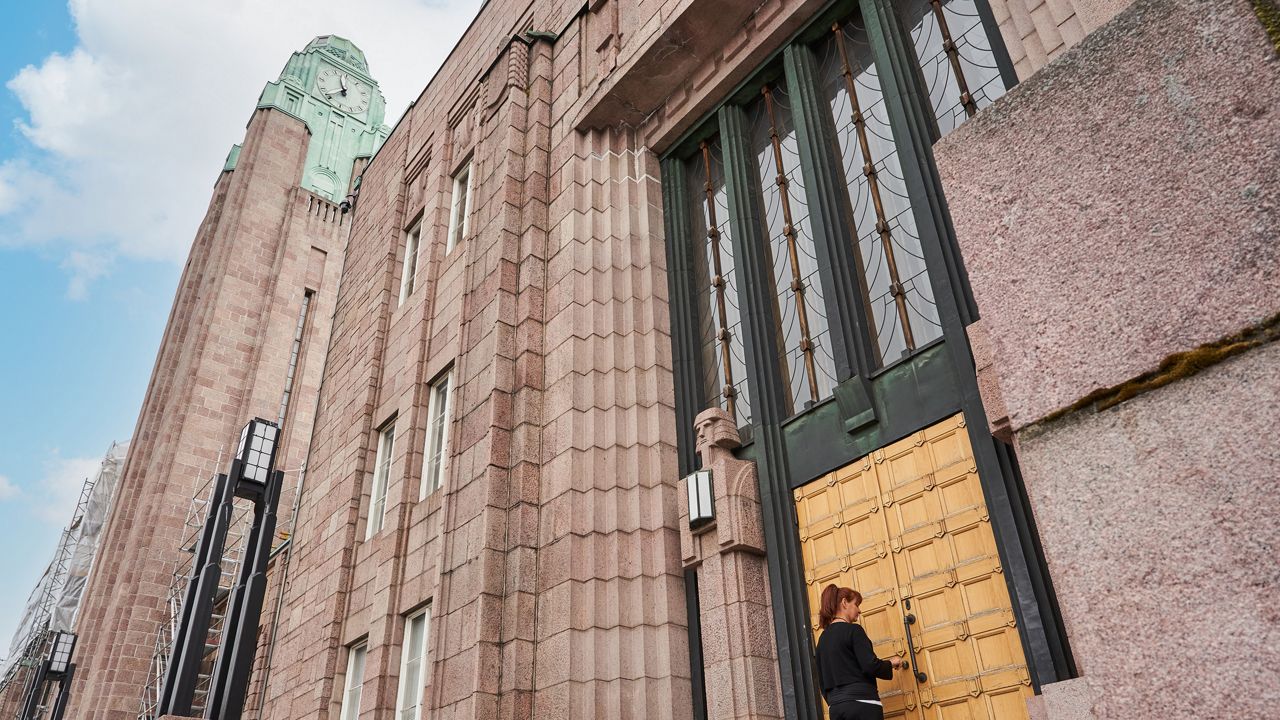
The first rays of morning sunlight slide along the imposing granite walls that rise up to 50 meters above Helsinki city centre. From there, you can watch the city wake up: people passing busily by the Stone Men, under whose watchful eyes time has been spent and friends have been met, heroes celebrated, protests held, reunions and farewells experienced, daily life lived, and dreams pursued. We are at the Helsinki Central Railway Station, designed by Eliel Saarinen, where its iconic architecture holds over a hundred years of history, yet behind the scenes beats modern technology. The digital ABLOY PULSE locking system ensures a secure meeting of cultural history and the future.
“Helsinki Central Railway Station is probably the most well-known and used building in Finland. We are dealing with a national treasure, and we want to keep it modern so it can serve its users not only today but for the next hundred years,” comments Jani Jääskeläinen, project manager at Helsinki Central Railway Station, on the station's renewal project.
“The station can’t be closed for a year or two, so its renovation is being done alongside the daily route of 250,000 visitors.”


As part of the station's multi-year development project, it was also decided to modernize its locking and access control system.
“Before the new system, key management was quite chaotic, and we often found ourselves in situations where the right key couldn’t be found. Thanks to the PULSE system, a massive keyring has been replaced with a single key that opens all necessary doors,” says the station's property manager, Susanna Mehtonen.


The system allows for the creation of individual access rights for each user, which is particularly beneficial in the station’s mall-like environment, with various commercial spaces, office tenants, and a wide range of third-party service providers. When tenants change, keys can easily be transferred to the next tenant, and access right changes are easily managed through cloud-based software. There’s no need for separate lock programming, as changes are communicated through readers to the keys within the system.
A locking system renovation that respects cultural history
Since the central railway station is a site of significant cultural and historical value and is heavily protected, any renovations, including those related to the locking system, cannot be done arbitrarily.
“All changes at the station are made in collaboration with the Finnish Heritage Agency, following strict regulations. Therefore, the appearance of the doors cannot be altered just like that. Here, the retrofit feature of the PULSE system was extremely important. It allowed the locking system to be updated by simply replacing the lock cylinder, preserving the original appearance of the doors,” says Mehtonen.

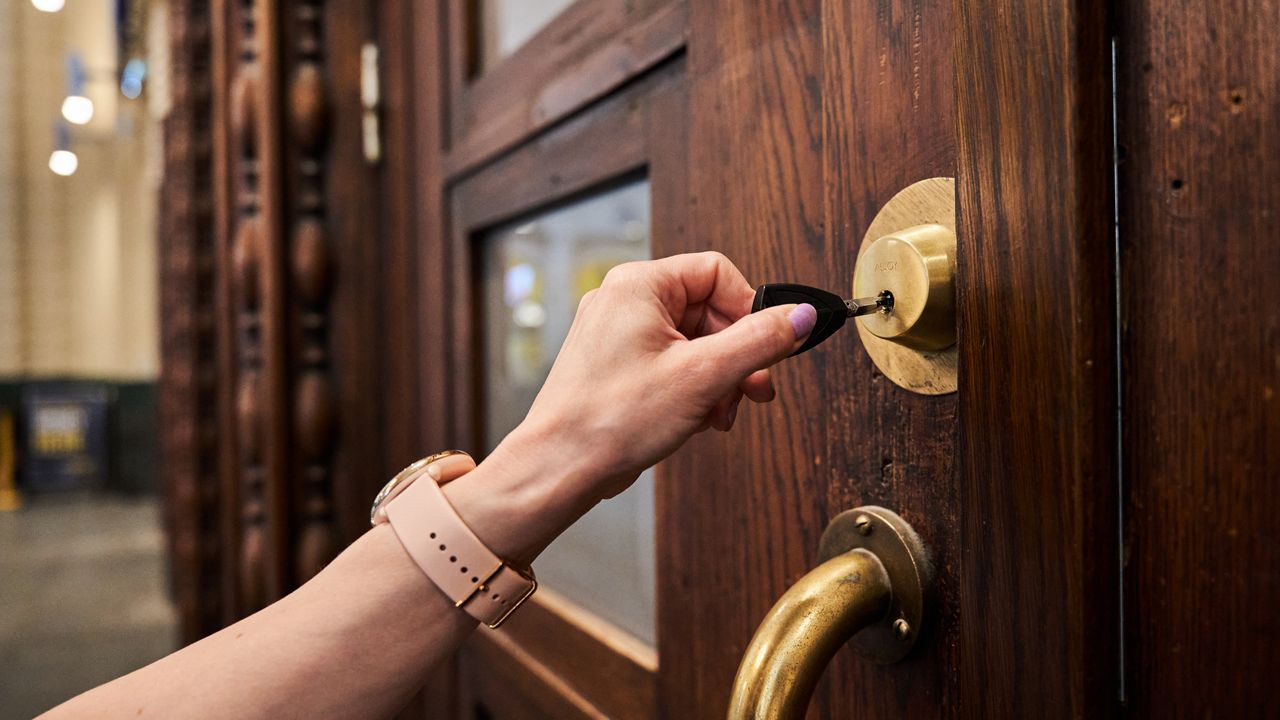
Since the system gets its operating power by inserting the key to cylinder and thus does not require any electrical wiring, there was no need to seek approval from the Finnish Heritage Agency for cabling. Every time a PULSE key is inserted into one of the PULSE locking devices, energy is generated that powers the lock's encrypted electronic security features.
Icons in collaboration
Abloy and Helsinki Central Railway Station share more than just collaboration and a strong place in Finnish culture – they also share an age: in 1919, both the station building designed by Eliel Saarinen and the company founded with Emil Henriksson’s patented original ABLOY lock opened their doors in newly independent Finland.
“Both Abloy and the central railway station are icons known to all Finns. In this collaboration, it’s safe to build on the station's history, present, and future,” Jääskeläinen concludes.

Download case card
- Helsinki Central Railway Station(PDF, 479 KB)
Used solutions
ABLOY PULSE
ABLOY PULSE is a unique digital locking and access management system that does not require batteries or cabling: The system gets its operating power when key is inserted to cylinder.


Distribution